
Acid and Hardness in Cook County Water: What USGS Data Reveals About Aquifer 110QRNR
$2,647.77
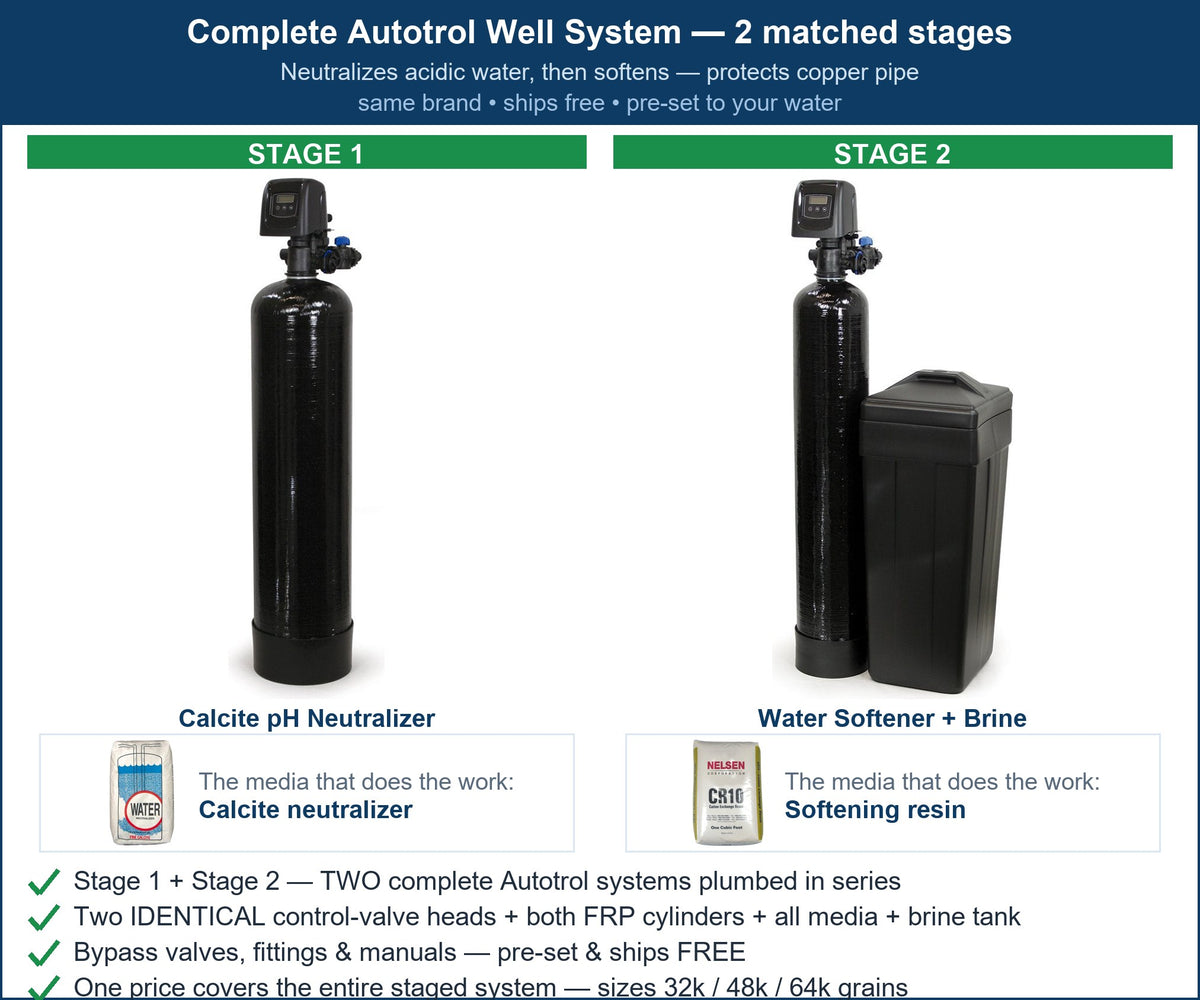
Autotrol Acidic Water + Hard Water (Well) System
✓ Free shipping in the USA · ✓ 90-day returns · ✓ Secure checkout

Myth: Hardness levels mean your household water is definitely problematic without precise testing
Many people assume that data describing hard water concentrations in their area directly defines their home's water hardness. What government sampling in Cook County's aquifer 110QRNR shows is a range of hardness between 296.0 and 755.0 mg/L, with a median of 453.0 mg/L from five samples collected between 2010 and 2021. These measurements identify calcium and magnesium presence but do not state individual well levels. Certified laboratory tests on your specific water source are necessary to know your household's exact condition and inform treatment.
Myth: You can pick effective treatment without documenting your water’s key characteristics
Before deciding on equipment, it's crucial to write down details from a current laboratory water test. These should include hardness levels reported as mg/L of calcium and magnesium combined, any acidity indicators, and well depth if known. This information helps match treatment capacity and technology to your household's demand, avoiding under- or over-sizing. Without this documentation, advice or product selection lacks the necessary foundation.
Myth: Large households or seasonal properties require the same treatment approach as standard homes
The scale and usage patterns of your property influence treatment needs. Larger families or homes with fluctuating occupancy will see variations in water consumption and demand on treatment equipment. In such cases, the grain capacity of treatment systems—such as the 32,000-grain Autotrol Acidic Water + Hard Water System—becomes an important consideration. These systems provide a balance between capacity and efficiency for household sizes and water quality typical of Cook County conditions.
Myth: Untreated acid and hardness only cause minor stains or taste issues that aren't worth addressing
Over time, untreated acid and hard water minerals can cause gradual wear on plumbing fixtures and appliances. While government data shows no federal safety thresholds are exceeded in the region’s samples, aesthetic secondary standards related to mineral content can affect water taste and cause staining on fixtures. Addressing these concerns with appropriate treatment supports long-term plumbing health and water enjoyment without implying any safety risk from the measured levels.
Myth: Water issues in household settings and those for commercial or industrial sites are the same
Commercial or industrial water users must consider additional factors such as higher flow rates, operational continuity, and regulatory compliance that differ from residential needs. Households focusing on the combination of acid and hardness can generally work with treatment options scaled to typical domestic water use, without the complex considerations larger facilities require.
Final guidance on testing and treatment choice
The most informative test to order is a comprehensive water analysis from a certified laboratory that includes hardness and acidity measurement. This test result will clarify your water's specific condition relative to Cook County's typical aquifer data. Once you have these results, you can confidently select a treatment system like the Autotrol Acidic Water + Hard Water System, which ships ready to configure and offers a 32,000-grain capacity designed to handle the levels indicated by regional data.
Where this information comes from
Source: USGS groundwater sampling. Sampled 2021-05-04. These figures describe groundwater sampled in this area. They are not a test of any individual private well - only a test of that well can establish its own water.
On record: U.S. Geological Survey sampling of Hardness, Ca, Mg in the 110QRNR aquifer (Cook County): 5 results from 4 wells, median 453.0 mg/L, range 296.0-755.0 mg/L; none above any federal threshold