
Faded Laundry in Mobile County: What Area Water Data Reveals for Commercial Use
Pricing: request a quote
Get a Quote1,200,000 Grain Skid-Mounted Commercial Water Softener
✓ Free shipping in the USA · ✓ 90-day returns · ✓ Secure checkout

How Public-System Records Differ from Private-Well Testing
Area Data Reflects General Aquifer Conditions, Not Specific Wells
Government sampling in Mobile County’s aquifer 122MOCN shows concentrations of calcium and magnesium—elements linked to water's scaling potential and laundry effects—across 26 wells. These results represent the area, not any specific well or business water supply. Only testing your own water can reveal its exact composition.
No Federal Thresholds Were Exceeded in This Aquifer's Samples
The 26 sampled wells, ranging 14 to 68 feet deep, showed calcium and magnesium detected in all samples, but none above federal limits. This means the water meets federal standards for these minerals, although their presence can still affect laundry appearance over time.
Changes for Larger Operations, Second Locations, or Seasonal Commercial Properties
Higher Volume Means Greater Exposure to Water Minerals
As your commercial laundry volume increases, even moderate mineral content can cause noticeable fabric fading or stiffness. Seasonal properties or second locations may see variable results depending on how long water sits or fluctuates in use.
Consistent Water Quality Matters for Maintaining Fabric Appearance
Maintaining consistent water treatment helps prevent fading caused by mineral buildup. Commercial operators benefit from equipment able to handle the capacity and demand of their specific operation.
Impact of Sample and Well Depth on Water Quality Expectations
Wells Between 14 and 68 Feet Provide Shallow and Moderate Depth Data
The samples characterize groundwater quality at these depths, typical of many commercial water sources in the area. Deeper wells or different source types may yield different mineral levels, reinforcing the need for site-specific water analysis.
Variability in Mineral Concentration Depends on Local Geology
The range of calcium and magnesium from 2.41 to 40.9 mg/L reflects natural variability within Mobile County’s aquifer system rather than contamination or health concerns.
Worked Example: Reading Area Data as a Commercial Operator
Median Values Help Set Expectations for Untreated Water
The median calcium plus magnesium concentration of 8.285 mg/L gives a baseline for what water mineral levels may look like in Mobile County aquifer 122MOCN. Operators can use this as a reference point before testing their own water.
Ranges Indicate Possible Variation Between Different Wells
The lowest and highest samples show that mineral levels may vary significantly depending on the exact location and depth of a well, so individual water testing is important.
What 'Detected', 'Median', and 'Range' Mean in This Sampling Record
'Detected' Indicates Measured Presence, Not a Problem
Every sample showed calcium and magnesium were present, which is typical for groundwater and expected in area aquifers. Detection does not signal a violation or safety concern.
'Median' Reflects the Middle Value Among Samples
The reported median concentration is a midpoint, meaning half the samples had lower and half had higher mineral content.
'Range' Shows the Spread of Values Found Across Wells
The minimum and maximum values demonstrate natural variability in the aquifer, not a safety or quality limit.
What to Document Before Seeking Treatment Advice
Collect Your Own Water Test Results for Calcium and Magnesium
Knowing your specific water’s calcium and magnesium levels is key. This information will clarify whether commercial water treatment equipment is needed.
Note Your Water Source Type and Well Depth
Record whether your source is a well or municipal supply and the depth or other relevant factors that might influence mineral content.
Estimate Your Peak Water Demand
Understanding your commercial operation’s water volume requirements supports selecting a treatment system with appropriate capacity.
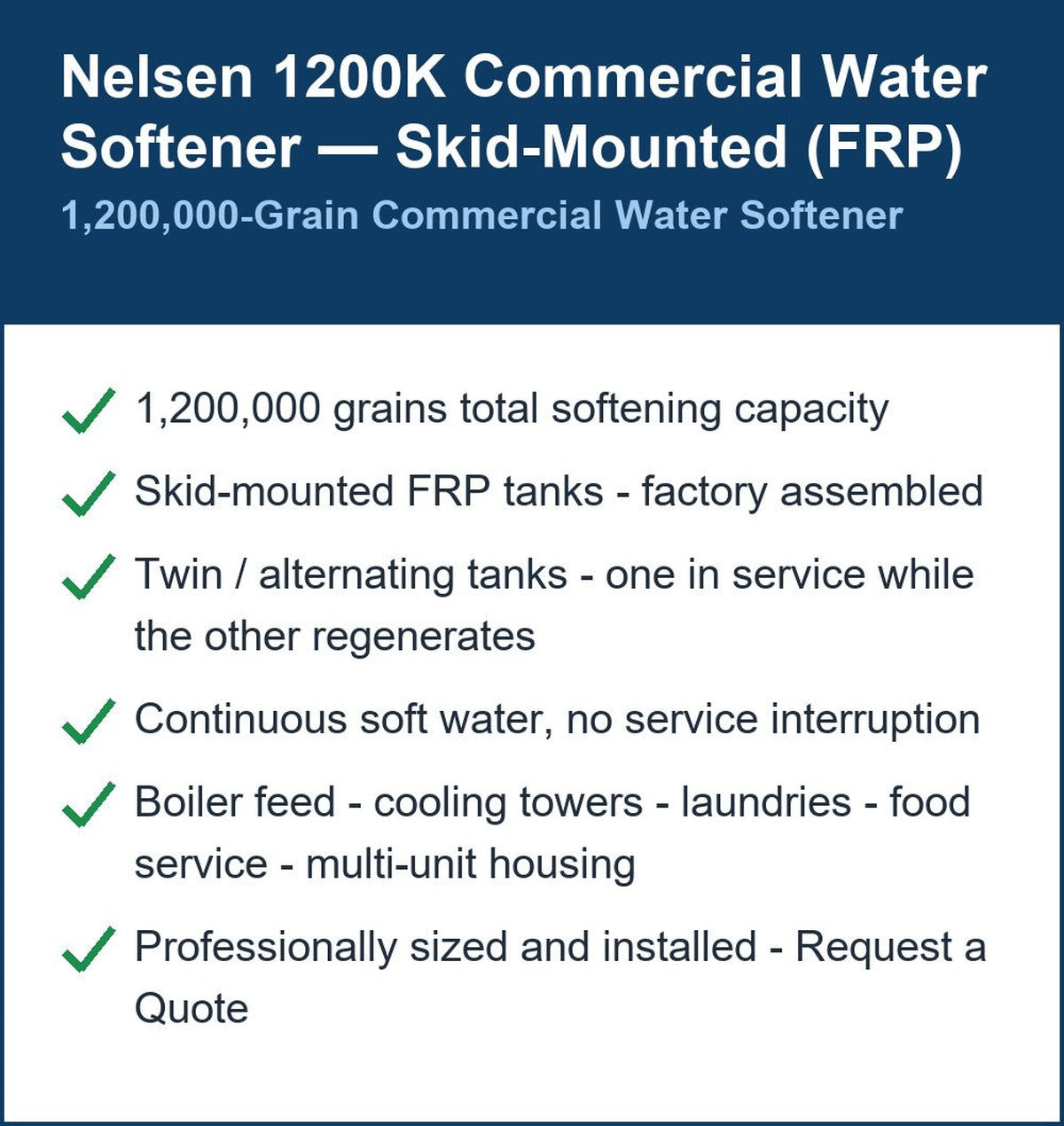
For commercial operations in Mobile County facing faded laundry challenges, the Nelsen 1,200,000 Grain Skid-Mounted Commercial Water Softener ships ready to configure and meets the demand profiles typical of these water conditions. This equipment class effectively addresses calcium and magnesium levels found in the area’s aquifer, helping protect fabric quality in large-scale laundering.
Where this information comes from
Source: USGS groundwater sampling. Sampled 2011-08-11. These figures describe groundwater sampled in this area. They are not a test of any individual private well - only a test of that well can establish its own water.
On record: U.S. Geological Survey sampling of Hardness, Ca, Mg in the 122MOCN aquifer (Mobile County): 26 results from 26 wells, median 8.285 mg/L, range 2.41-40.9 mg/L; none above any federal threshold