
Limescale Concerns for Commercial Water Use in CT: Understanding Groundwater Hardness Range
Pricing: request a quote
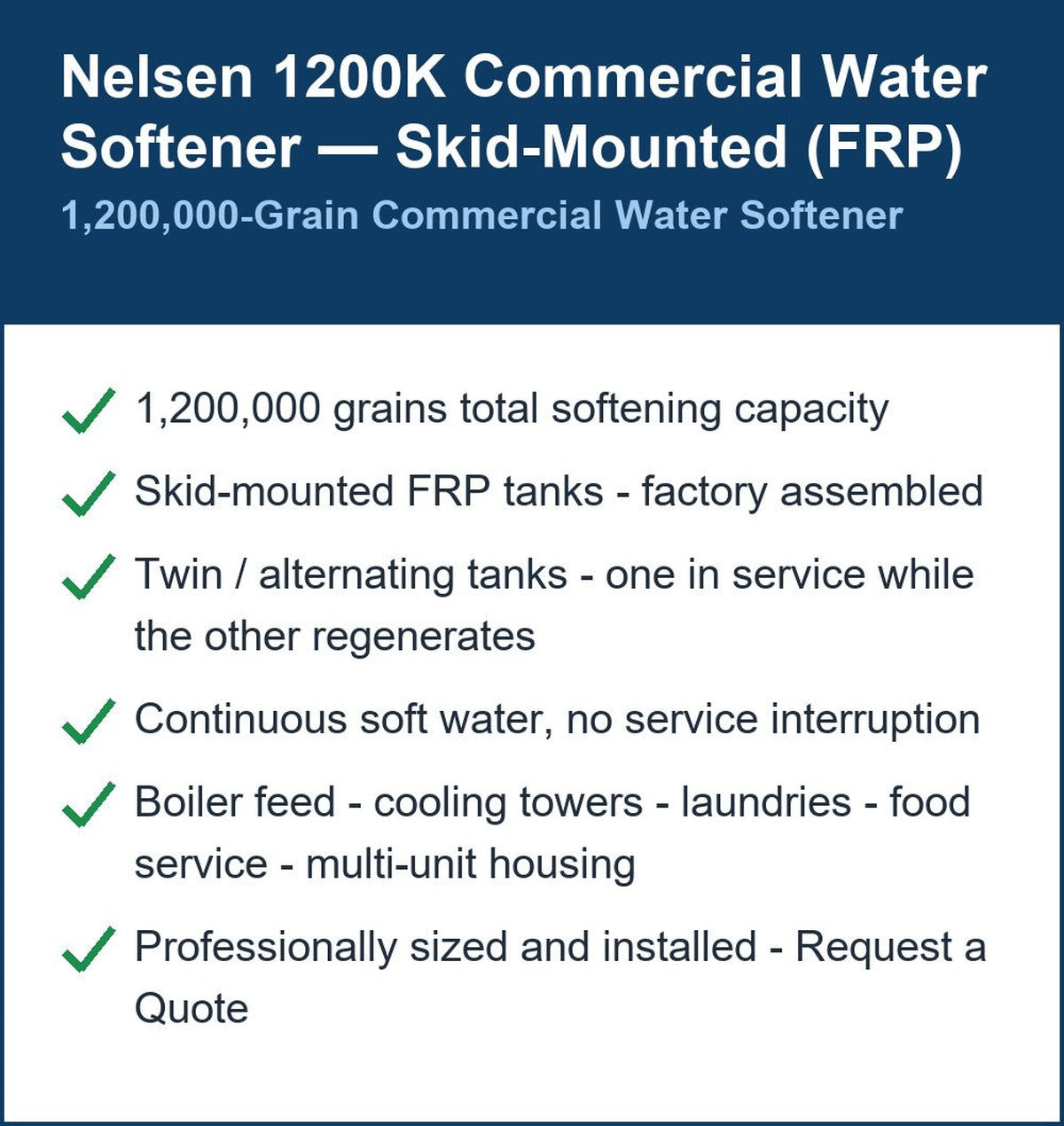
Get a QuoteNelsen 1,200,000 Grain Skid-Mounted Commercial Water Softener
✓ Free shipping in the USA · ✓ 90-day returns · ✓ Secure checkout

What should I record before seeking advice on limescale treatment?
Before considering any water treatment solution, especially for limescale, write down the results of a recent hardness test from your own water supply. Although the U.S. Geological Survey sampled 19 wells in the FIPS 180 area aquifer 112DFSF, providing a median hardness of 66.2 mg/L ranging from 15.9 to 1680.0 mg/L, these figures reflect regional groundwater and not your specific source. Knowing your own water's hardness, calcium, and magnesium levels from a certified lab test is essential.
How do calcium and magnesium enter groundwater in this Connecticut region?
In the FIPS 180 area with aquifer 112DFSF, calcium and magnesium naturally dissolve from minerals in soil and bedrock into the groundwater. This causes measurable hardness, which was detected in all 69 water samples across various depths from 10 to 80 feet. These minerals are benign in terms of health but can cause scale buildup on pipes and equipment over time, leading to operational challenges in commercial settings.
What is the typical maintenance rhythm for commercial water softening equipment?
The Nelsen 1,200,000 Grain Skid-Mounted Commercial Water Softener is designed for high-capacity treatment of hardness. Maintenance generally involves routine checks of salt levels and system performance, with salt replenishment schedules depending on water use volume and hardness levels. The system ships ready to configure and can be monitored for salt consumption and regeneration frequency, which typically align with commercial water use patterns to ensure consistent limescale control.
How do I judge if treatment capacity matches my facility’s daily water demand?
Assess your average daily water consumption and compare it with the grain capacity of a treatment system. The Nelsen unit handles up to 1,200,000 grains, meaning it processes that amount of hardness before regeneration is needed. Estimating your daily grain load from test results and consumption will help determine if this system can meet the demand without frequent service interruptions important in commercial operations.
What do 'detected', 'median', and 'range' mean in government water sampling?
'Detected' means calcium and magnesium were found in every tested well in this aquifer region, not that any well’s level is excessive. The 'median' is the middle hardness value, 66.2 mg/L, indicating typical regional conditions. The 'range' from 15.9 to 1680.0 mg/L shows variability among wells but no federal safety threshold was exceeded. This data confirms the presence and variability of hardness but does not establish conditions for any individual water source.
In summary, the U.S. Geological Survey's sampling of 19 wells in FIPS 180 aquifer 112DFSF between 2015 and 2025 confirms regional hardness levels range widely but remain within federal limits. For commercial operators concerned about limescale, understanding your water’s specific test results and selecting a commercial water softening system like the Nelsen 1,200,000 Grain Skid-Mounted model will help address hardness challenges effectively.
Where this information comes from
Source: USGS groundwater sampling. Sampled 2025-11-21. These figures describe groundwater sampled in this area. They are not a test of any individual private well - only a test of that well can establish its own water.
On record: U.S. Geological Survey sampling of Hardness, Ca, Mg in the 112DFSF aquifer (FIPS 180): 69 results from 19 wells, median 66.2 mg/L, range 15.9-1680.0 mg/L; none above any federal threshold