
Limescale Challenges in Caddo Parish: Addressing Industrial-Scale Water Issues from Aquifer 124WLCX
Pricing: request a quote
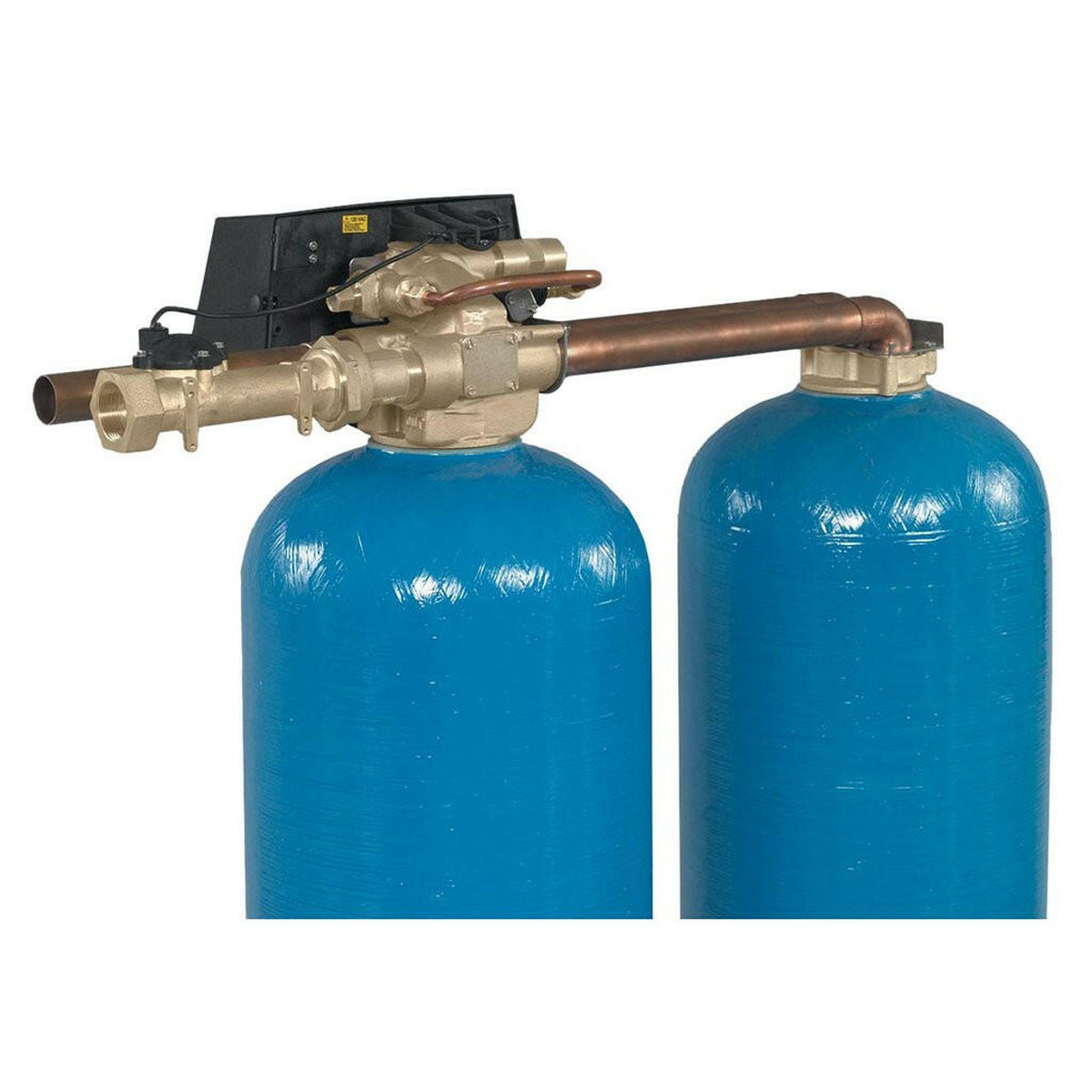
Get a QuoteFleck Industrial 150,000 Grain Commercial Water Softener
✓ Free shipping in the USA · ✓ 90-day returns · ✓ Secure checkout

What Happens When Limescale Is Left Untreated for Years
Gradual buildup on industrial equipment surfaces
Limescale forms from calcium and magnesium minerals in water. Over time, this buildup can reduce heat transfer efficiency and increase energy consumption in industrial processes.
Potential for reduced equipment lifespan
The mineral deposits can cause wear and tear on pumps, boilers, and pipelines, leading to higher maintenance needs and premature equipment failure.
Impact on process reliability without immediate safety concerns
While limescale primarily affects operational efficiency, the U.S. Geological Survey reports no federal safety thresholds exceeded in Caddo Parish aquifer 124WLCX groundwater samples.
Facility Symptoms That Do and Do Not Indicate Limescale
Common symptoms possibly indicating limescale
- Reduced heat exchanger efficiency
- Visible scaling on pipes and equipment
- Increased energy consumption
Symptoms not necessarily caused by limescale
- Water discoloration or taste changes
- Corrosion unrelated to mineral buildup
- Biological fouling or sediment deposits
Effects of Sample Depth, Well Depth, or Source Type
Variation in mineral concentrations by well depth
Samples taken between 140 and 342 feet deep in Caddo Parish aquifer 124WLCX show calcium and magnesium concentrations range widely—from 3.46 to 311.0 mg/L—indicating diverse hardness levels even within the same aquifer.
Surface versus deep well water differences
Deeper wells may show different mineral profiles compared to shallow wells due to geological differences, affecting hardness and the potential for limescale formation.
Additional Industrial Questions Beyond Household Concerns
Scale impact on process throughput and downtime
Industries must also consider how limescale buildup can reduce operational uptime and efficiency, which directly affects production output and costs.
Capacity requirements for water treatment solutions
Large-scale operations require equipment rated for high grain capacities to manage mineral load effectively—such as a 150,000 grain mineral-tank commercial water softener.
Compliance with operational specifications
Confirming treatment methods align with specific industrial needs and water use patterns is essential for sustained process performance.
Understanding Certified Laboratory Tests for Calcium and Magnesium
What a typical hardness test reports
Tests measure calcium and magnesium concentrations in mg/L, which together quantify water hardness. The USGS median value in the area is 55.6 mg/L, with no federal thresholds exceeded in the sampled wells.
Interpreting test results for industrial decision-making
Knowing exact concentrations helps predict scaling potential and select appropriate treatment capacity and technology.
Seasonal and Multi-Year Variation in Hardness Levels
Range of measurements over nearly two years
Data from October 2013 to June 2015 show hardness ranging between 3.46 and 311.0 mg/L in Caddo Parish aquifer 124WLCX, demonstrating significant variability in sampled wells over time.
Implications for planning water treatment
This variation suggests industrial water treatment systems need flexibility to handle fluctuating hardness without performance compromise.
Addressing limescale in industrial settings requires careful evaluation of water hardness based on certified laboratory tests and regional data like that available from USGS sampling in Caddo Parish aquifer 124WLCX. For operations facing variable mineral levels at this scale, a 150,000 grain mineral-tank commercial water softener can provide the robust capacity needed to manage these challenges efficiently. Requesting a quote for this commercial solution allows precise sizing and specification tailored to your facility's unique water profile and usage.
Where this information comes from
Source: USGS groundwater sampling. Sampled 2015-06-11. These figures describe groundwater sampled in this area. They are not a test of any individual private well - only a test of that well can establish its own water.
On record: U.S. Geological Survey sampling of Hardness, Ca, Mg in the 124WLCX aquifer (Caddo Parish): 17 results from 8 wells, median 55.6 mg/L, range 3.46-311.0 mg/L; none above any federal threshold