
Limescale Challenges in Citrus County: Understanding Aquifer 120UFAQ Water Conditions
$900.00
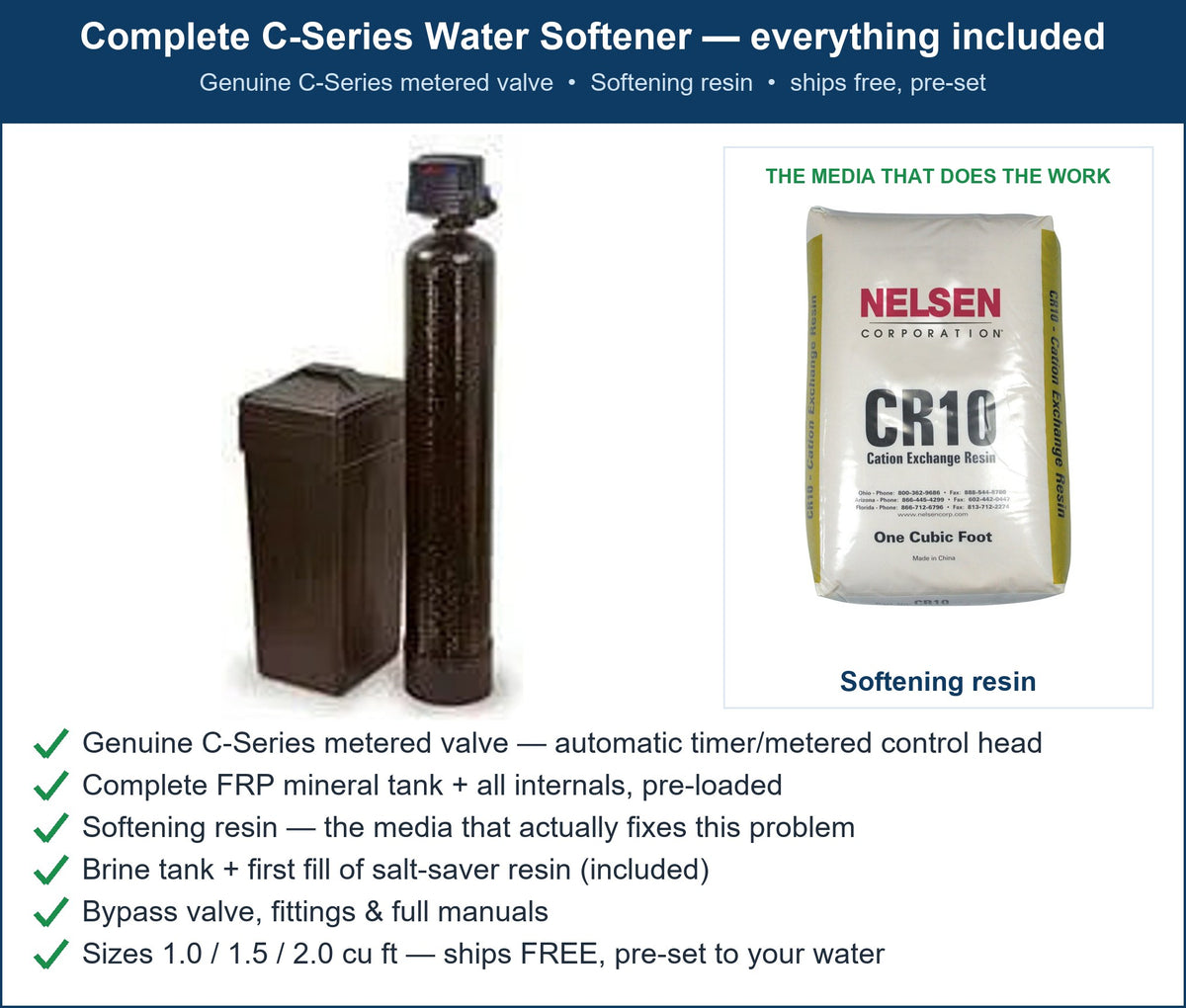
C-Series Limescale & Scale Buildup System
✓ Free shipping in the USA · ✓ 90-day returns · ✓ Secure checkout

Limescale Is Not the Same as Iron or Sediment Deposits
Many households mistake reddish or gritty buildup as limescale. However, limescale specifically results from calcium and magnesium compounds hardening inside pipes and appliances. Iron or sediment deposits have different chemical origins and treatment needs. According to U.S. Geological Survey groundwater sampling in Citrus County’s aquifer 120UFAQ, limescale-related minerals—calcium and magnesium—were consistently detected, but iron was not the focus here. Understanding this distinction helps avoid misdirected remedies.
The C-Series System Addresses Limescale by Managing Calcium and Magnesium Compounds
The C-Series Limescale & Scale Buildup System operates by neutralizing or altering calcium and magnesium ions that contribute to scale formation. Instead of removing these minerals outright, the system changes their chemical form to reduce hardness impact, preventing buildup inside household water lines and appliances. This method is especially useful where traditional water equipment maintains flow but can no longer keep up with ongoing scale accumulation.
Unmanaged Limescale Gradually Reduces Appliance Efficiency Without Immediate Health Concerns
If left unaddressed, limescale accumulates inside water heaters, faucets, and plumbing fixtures, leading to decreased efficiency and higher energy costs. Over years, it can cause clogging and damage that complicate repairs. Note that measured concentrations from area aquifer samples—ranging from 99.3 to 261.0 mg/L total hardness—are not violations of any federal standards. The issue primarily affects equipment performance and maintenance rather than posing direct health risks.
Detected, Median, and Range: What the Citrus County Aquifer Record Reveals
In the Citrus County aquifer 120UFAQ, hardness related to calcium and magnesium was detected in all sampled wells, with a median hardness concentration of 200.0 mg/L. The range across 18 samples from nine wells over a year spanned from 99.3 to 261.0 mg/L. ‘Detected’ indicates instruments recorded these minerals consistently; this does not imply water quality violations. The median provides a central value typical of the region, while the range shows natural fluctuations across different locations and times.
Comparing Citrus County’s Aquifer Data to Neighboring Counties Requires Careful Context
Hardness levels can vary between adjacent counties due to geological differences and water sources. When comparing Citrus County to a neighboring area, consider the scope of sampling, sample depth, and timeframe. For example, the aquifer 120UFAQ record is based on wells 46 to 107 feet deep over a 12-month period. Without matching such parameters, differences in detected hardness may reflect natural variation rather than a true water quality improvement or decline.
Matching Treatment Capacity to Your Household’s Daily Water Demand
To ensure effective control of limescale, treatment capacity should align with your household’s peak daily water use. Measuring your water consumption patterns helps determine the volume the C-Series Limescale & Scale Buildup System needs to manage daily hardness loads without being overwhelmed. This approach prevents ongoing scale buildup that existing equipment alone cannot handle. Properly sizing treatment maintains consistent water flow and protects appliances over time.
The C-Series Limescale & Scale Buildup System ships ready to configure and provides a targeted solution for hardness issues documented in Citrus County’s aquifer 120UFAQ. By basing treatment on measured household water demand and understanding the regional water hardness data, you can effectively address persistent limescale challenges with a precise, proven technology.
Where this information comes from
Source: USGS groundwater sampling. Sampled 2012-12-17. These figures describe groundwater sampled in this area. They are not a test of any individual private well - only a test of that well can establish its own water.
On record: U.S. Geological Survey sampling of Hardness, Ca, Mg in the 120UFAQ aquifer (Citrus County): 18 results from 9 wells, median 200.0 mg/L, range 99.3-261.0 mg/L; none above any federal threshold