
Maine Manufacturing Plants: Water Treatment Equipment Guide
Pricing: request a quote
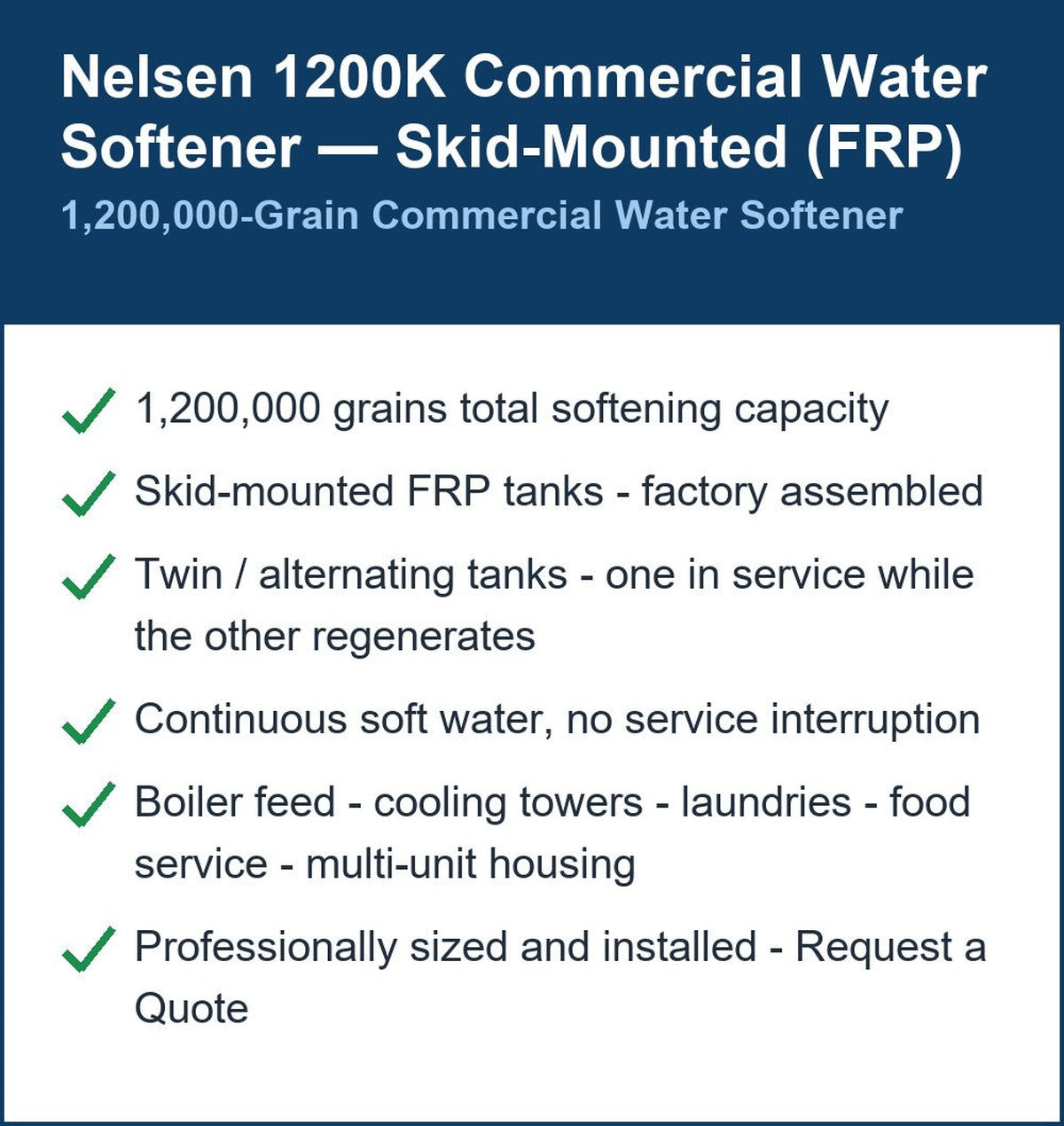
Get a Quote1,200,000 Grain Skid-Mounted Commercial Water Softener
✓ Free shipping in the USA · ✓ 90-day returns · ✓ Secure checkout

Maine Manufacturing Plants: Water Treatment Equipment Guide
In manufacturing plants across Maine, water is an invaluable asset that drives production efficiency. However, untreated water can lead to significant challenges, degrading equipment, increasing operational costs, and ultimately affecting overall output. Understanding how to manage water quality is crucial for maintaining a smooth operational flow and ensuring that all processes run efficiently.
Impact of Untreated Water on Equipment
Manufacturing plants often utilize machinery that is sensitive to water quality. Untreated water can introduce particles, scale, and corrosion into equipment, leading to:
- Decreased equipment lifespan due to corrosion and scaling.
- Increased maintenance costs stemming from frequent repairs and part replacements.
- Reduced efficiency of cooling systems and production processes.
These factors can escalate operational costs significantly, emphasizing the need for effective water treatment solutions to safeguard your investments.
Understanding Water Demand in Manufacturing
In manufacturing environments, understanding peak versus average water demand is critical for sizing treatment equipment. Peak demand often occurs during specific operational stages, which can differ widely from average daily requirements. This disparity influences the necessary flow rate (measured in gallons per minute) and overall capacity (expressed as grains per day).
Duty Cycle and Equipment Sizing
The duty cycle of your facility's water usage largely dictates the sizing of your water treatment equipment. When selecting equipment, consider:
- Average flow rates during typical operations versus peak demands.
- Capacity needs based on production schedules and unforeseen spikes in usage.
- Redundancy requirements to manage extreme demands without compromising water quality or production downtime.
Alternating configurations (duplex systems) allow a seamless transition during maintenance periods while continuing to meet operational demands, thus enhancing reliability.
Pretreatment Needs
Pretreatment is a vital aspect of ensuring that the water entering your system is of sufficient quality to extend equipment life and optimize performance. Factors to consider include:
- Filtration to remove sediment and particulates.
- Water softening to eliminate hardness and prevent scaling.
- Advanced treatments like reverse osmosis or deionization for specific manufacturing needs.
Each pretreatment step contributes to achieving the desired water quality standards necessary for efficient operation.
Maintenance and Consumables
Proper maintenance is essential for ensuring the longevity and efficiency of your water treatment systems. Understand the following:
- Regular maintenance intervals for filters, membranes, and other consumables.
- Indicators for replacement or servicing, such as pressure drops or volume reductions.
- Maintenance challenges posed by your facility layout and accessibility of equipment.
Establishing a proactive maintenance schedule will minimize downtime and ensure consistent water quality.
Space and Drainage Requirements
When selecting water treatment equipment, it is critical to assess both space constraints and drainage requirements. Key considerations include:
- The footprint of the equipment and ensuring adequate room for operation and maintenance.
- Access to drains to facilitate the disposal of backwash or reject water from filtration and softening processes.
- Proximity to existing water and utility lines to streamline installation.
Specification Questions to Address Before Purchase
Before investing in water treatment solutions, be sure to clarify these essential specifications:
- What are your peak and average water demands?
- What is the anticipated flow rate and overall capacity required?
- What pretreatment processes are necessary for your specific application?
- What are your space constraints and drain access needs?
By thoroughly addressing these questions, you can ensure that the water treatment equipment you select is tailor-fit to meet the unique demands of your manufacturing facility.
Regulatory Compliance and Standards
Adhering to relevant regulatory compliance and industry standards is crucial in water treatment processes. Different sectors have varying regulations governing water quality, safety, and environmental impact. Understanding these standards helps in selecting appropriate technologies and ensuring operational legitimacy.
- Familiarize yourself with local and national regulations, such as the EPA guidelines in the United States.
- Stay updated on industry-specific standards, including those from the FDA for food processing or NSF for drinking water treatment.
- Implement procedures for regular testing and documentation of water quality to meet compliance requirements.
Technology Integration
The integration of advanced technologies in water treatment can enhance efficiency and monitoring capabilities. Consider the following technologies:
- Smart Monitoring Systems: Utilize real-time data analytics and IoT devices for continuous monitoring of water quality parameters.
- Automation: Implement automated controls for managing processes such as chemical dosing and flow regulation for greater precision.
- Data Management Software: Leverage software solutions for efficient data collection, analysis, and reporting to streamline operations.
Operator Training and Safety Protocols
Proper training for operators is essential to safely and effectively handle water treatment systems. Establish a comprehensive training program that includes:
- Operational procedures for equipment use and emergencies.
- Safety protocols, including personal protective equipment (PPE) requirements and hazard awareness.
- Regular refresher courses to keep operators informed about updates in technology and protocols.
Scalability Considerations
Evaluate the scalability of your water treatment systems to accommodate future growth or changes in demand. Critical factors include:
- The capacity to add additional components or systems as production increases.
- Flexibility in processes to adapt to varying water quality requirements.
- Budgeting for future upgrades and expansions without compromising existing operations.